

What Affects the Cost of Tree Removal in Lakeland?
It is the first question almost everyone asks us, and the honest answer is that two trees the same height can cost very different amounts to take down. A pine standing alone in an open backyard is one job. A live oak leaning over a pool cage, with a fence on one side and the house on the other, is a completely different one.
We do not publish prices, because we would rather look at your tree than guess. But you should know what actually drives the cost, so the number on your estimate makes sense.
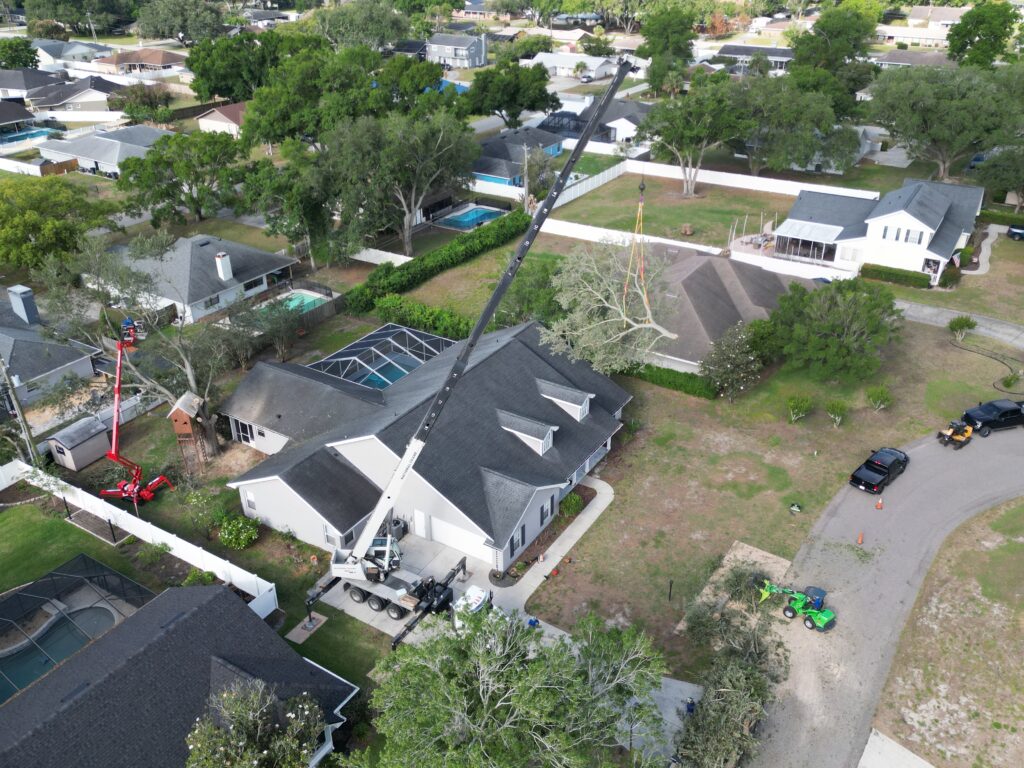
1. The size of the tree, and how it is built
Height matters, but so do trunk size, canopy spread and the type of wood. A mature live oak is dense and heavy, with long limbs that reach out over everything around it. A pine of the same height usually comes apart in fewer, lighter pieces. Trees with several large trunks take more cuts and more rigging than a single straight stem.
2. What is underneath it
This is the biggest factor most people do not expect. If a tree can be dropped in one piece into an open yard, the job goes quickly. If it stands over a roof, pool enclosure, fence, driveway or garden, every limb has to be cut in pieces and lowered on ropes. That takes more time, more people and more care.
If a tree is touching power lines, call your electric provider first. Lines coming from the pole are their responsibility, and no tree crew should work near them until they are cleared or made safe.
3. Access to the tree
A tree in the front yard next to the driveway is easy to reach. A tree in a fenced backyard, behind the house, with a septic drainfield in the way, is not. Our 72-foot spider lift fits through a 36-inch gate, and our loader on turf tires moves wood without rutting the lawn, but tight access still adds time.
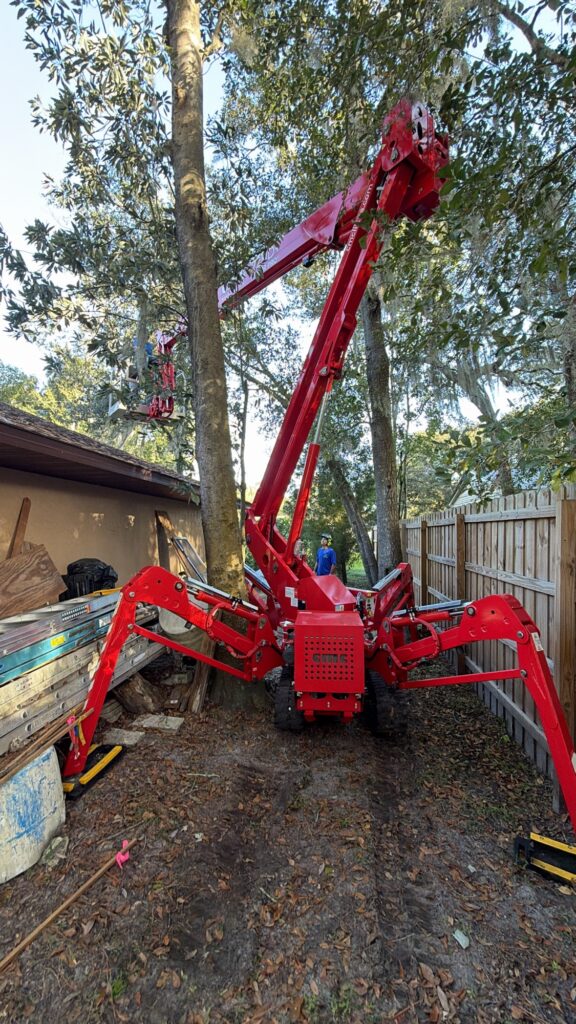
4. The equipment the job needs
Some trees can be taken down with climbing gear and ropes. Others need a lift, and the biggest or most hazardous trees near homes need a crane. A crane might look like an added cost, but on large trees it is often the safer and quicker option, lifting heavy wood up and over the house instead of taking it down piece by piece.
5. The condition of the tree
A healthy tree is predictable. A dead tree is brittle and can break unexpectedly, so it often cannot be climbed safely. Storm-damaged trees are under tension, with split wood and twisted limbs that can spring when cut. Decay, cracks and hollow trunks all mean slower, more careful work.
6. Cleanup and what you want left behind
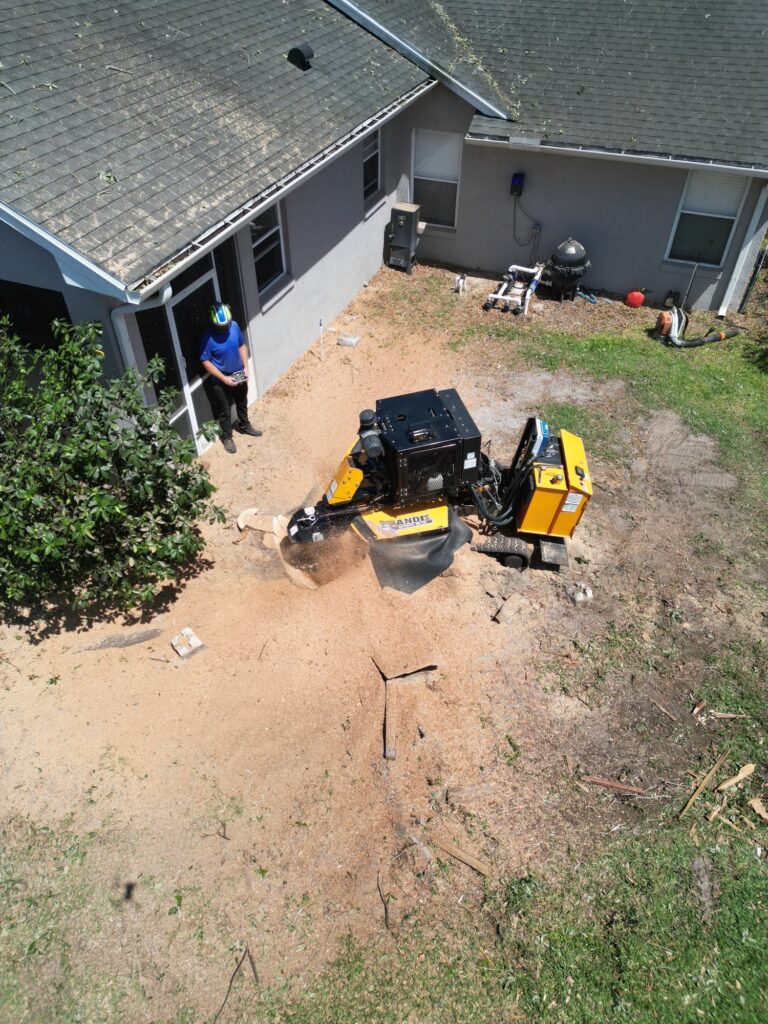
Ask what is included. Some customers want everything hauled away. Others want the logs left for firewood. Stump grinding is usually priced separately, and so is hauling away the grindings and leveling the spot afterward.
7. Timing
A scheduled removal costs less than an emergency. After a hurricane or a bad summer storm, demand jumps and crews work long hours on the most urgent calls first. If a tree has been worrying you for a while, the best time to deal with it is before storm season, not after.
How to get an accurate estimate
- Walk the tree with the estimator. Point out anything underneath it: sprinkler heads, septic lines, landscape lighting or a fence you care about.
- Ask what is included. Hauling, stump grinding, cleanup of the grindings and any lawn repair should all be clear.
- Check insurance. Ask for a certificate of insurance, and make sure the company carries workers’ compensation, so you are not on the hook if someone is hurt on your property.
- Be careful with door-knockers after storms. Out-of-town crews often show up after hurricanes. A local company with a long track record is easier to hold accountable.
Our estimates are free, and we accept credit cards and offer financing. If you are not sure whether a tree needs to come down at all, we will tell you honestly. Sometimes pruning or cabling is all it needs. Learn more about our tree removal service.
Need help with your trees? Call (863) 267-TREE or request a free estimate. We serve Lakeland and nearby towns.