

8 Signs Your Tree May Be Dangerous
Around Lakeland, the afternoon thunderstorms in summer find every weak tree on the block. The good news is that most trees give warning signs long before they fail. If you know what to look for, you can deal with a problem on your schedule instead of the storm’s.
Here are the eight signs we see most often, and what each one usually means.
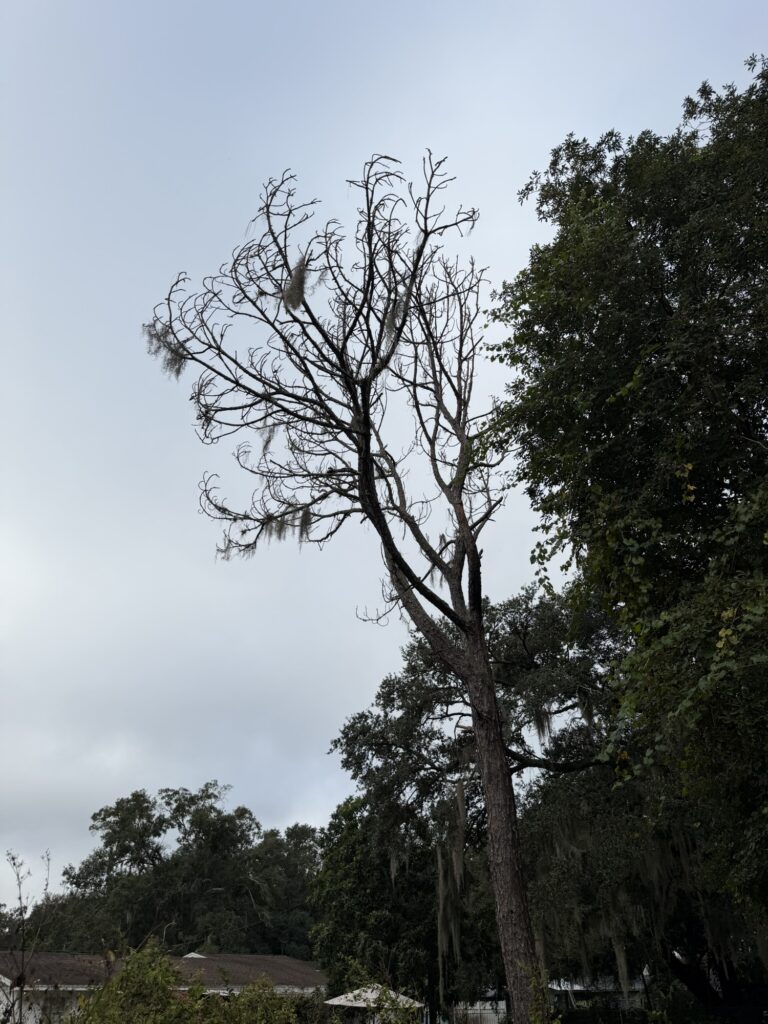
1. Dead wood in the canopy
Dead branches do not bend in the wind. They snap. Look up into the tree in summer, when everything should be leafed out, and watch for bare limbs or branches with dry, peeling bark. Broken limbs that are hung up in the canopy, called hangers, are especially dangerous because they can drop at any time.
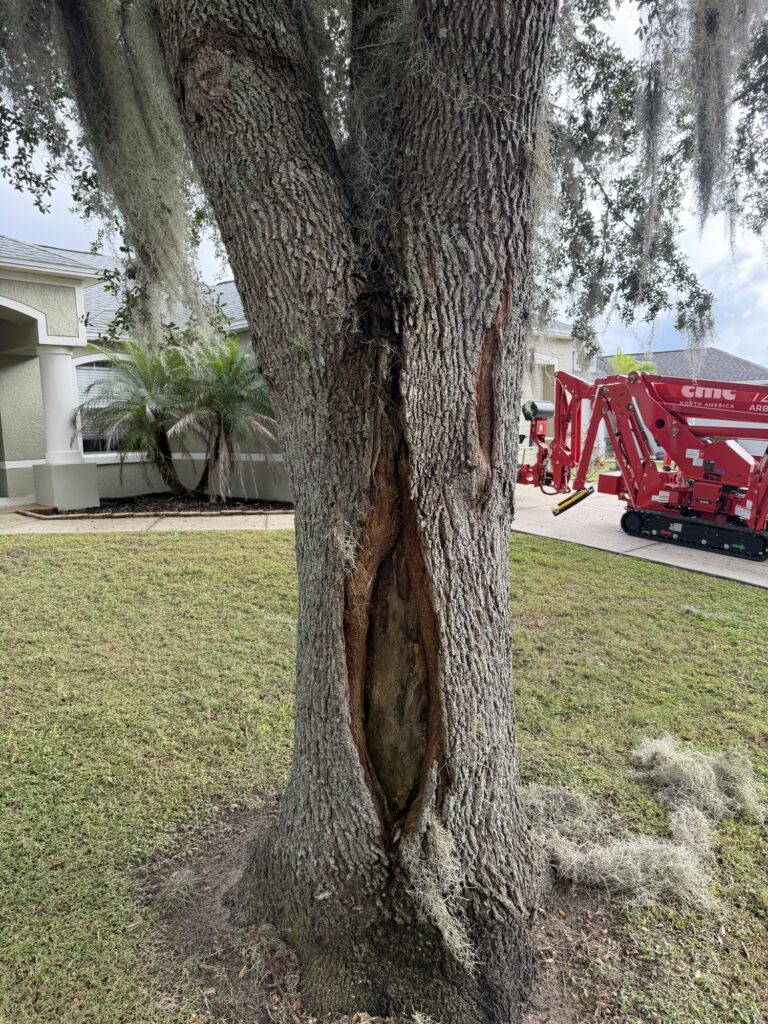
2. Cracks and splits
A deep crack in the trunk, or a split where two large limbs meet, is a structural problem. Pay special attention to tight V-shaped unions. When bark gets pinched between two stems, the joint is weak and tends to split under load. Sometimes cabling can support it. Sometimes it is too far gone.
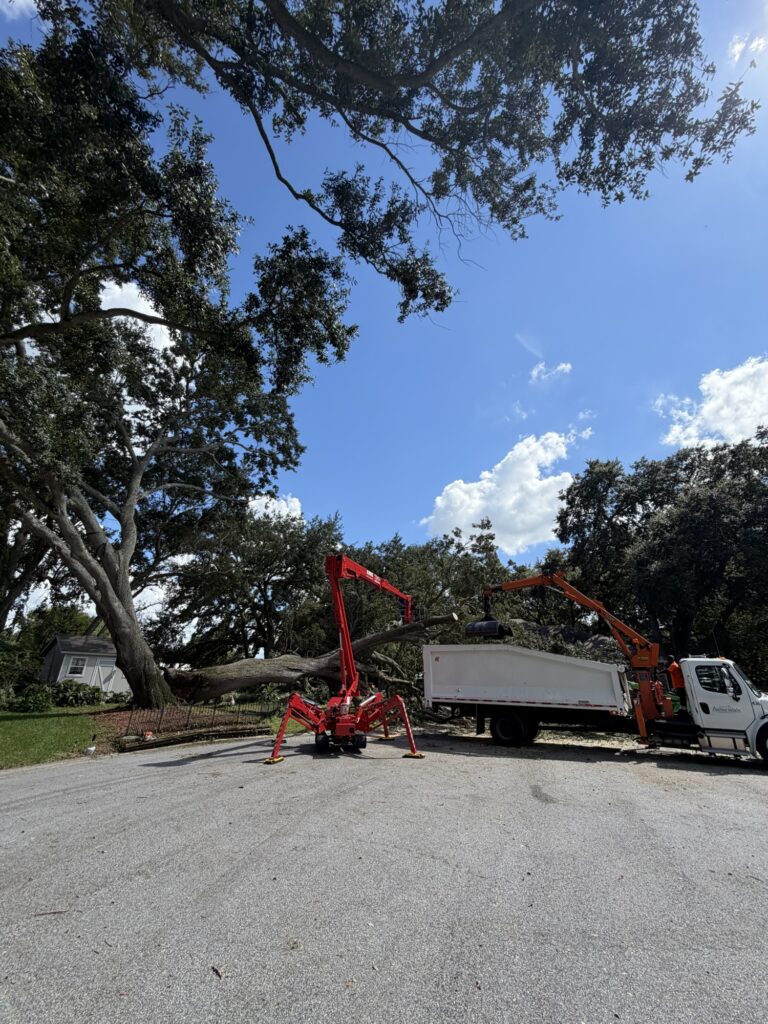
3. Fungus, mushrooms or conks at the base
Mushrooms around the root flare or shelf-like conks on the trunk usually mean decay inside the wood. By the time fungus shows on the outside, the rot has often been working for years. Decay at the base or in the main roots is one of the most common reasons sound-looking trees fall over.
4. A new lean
Plenty of trees grow with a lean and stay that way for decades. What matters is change. If a tree starts leaning where it did not before, or you see soil cracked or lifting on the side opposite the lean, the roots may be failing. That is a call-us-today situation.
5. Long, heavy limbs
Oaks especially can grow limbs that reach far out over a roof or driveway, with most of their weight out at the tips. These overextended limbs can fail even on calm days. Reducing their weight with proper pruning is far cheaper than repairing a roof.
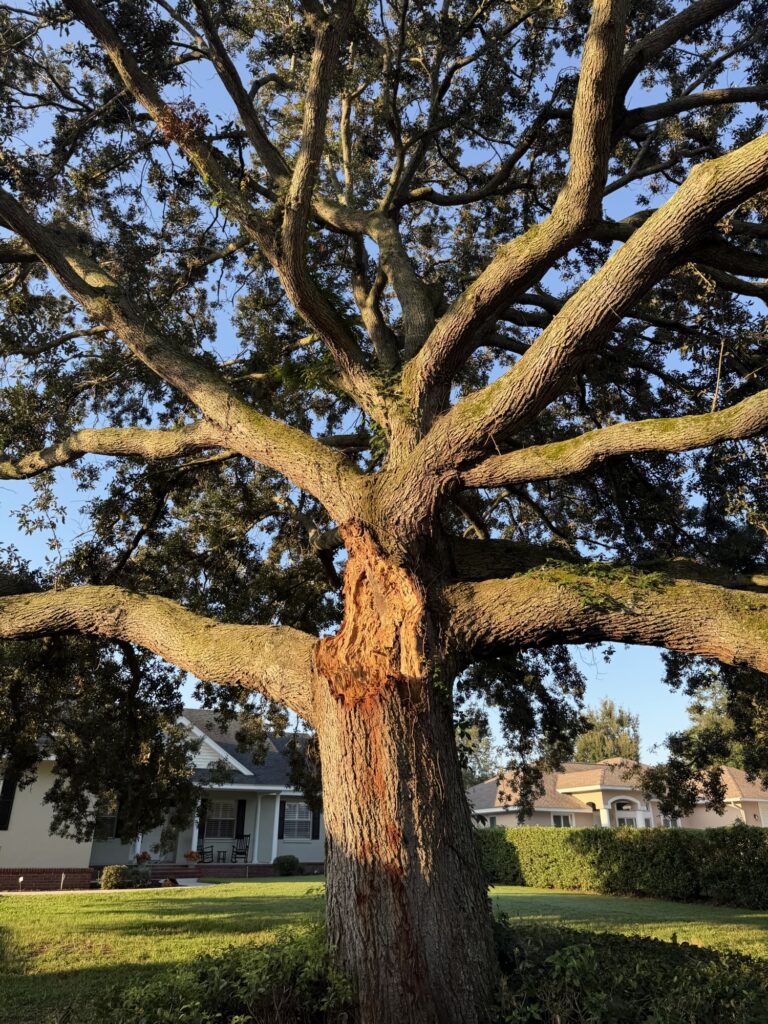
6. Lightning damage
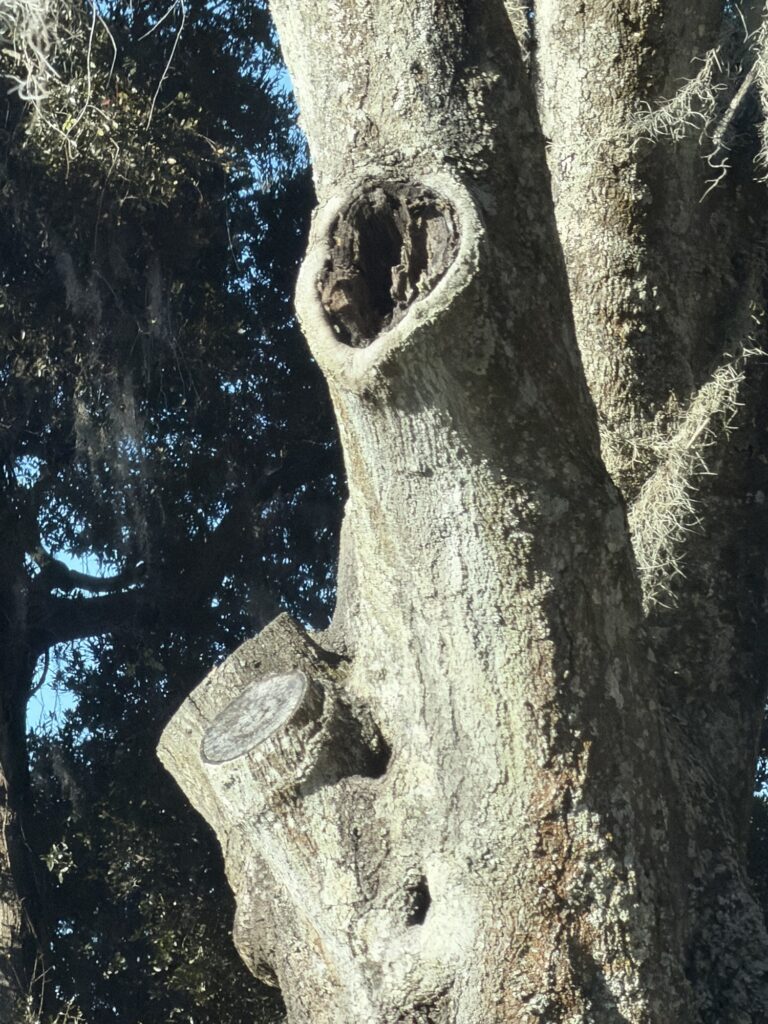
Central Florida gets a lot of lightning, and tall trees take the hits. Look for a strip of bark blown off down the trunk. Pines often decline quickly after a strike, turning brown from the top down, and bark beetles move in. Some struck oaks can be saved with structural pruning, like the live oak below. Others cannot.
7. Root damage from construction
New driveways, pools, room additions and sewer work all cut roots. The tree can look fine for a year or two, then begin dying back from the top or lean after a storm. If there has been digging within the drip line of a big tree, keep an eye on it.
8. Old topping or bad pruning cuts
Topping and oversized cuts leave large wounds that the tree cannot seal. Decay moves in, and the new shoots that sprout around old cuts are weakly attached. A tree that was topped years ago can look full and healthy while rotting inside.
What to do if you see these signs
- Do not climb the tree or cut limbs that are under tension. Leave that to a professional crew with the right equipment.
- Keep people and pets away from anything that looks ready to fall, especially near play areas and driveways.
- Call your electric provider if a tree is touching power lines.
- Get it looked at. A trained eye can tell you whether the tree needs pruning, cabling or removal.
We do free estimates around Lakeland and nearby towns, and we will give you an honest answer, even if the answer is that your tree is fine. If a tree is already on your home, see our emergency tree service.
Need help with your trees? Call (863) 267-TREE or request a free estimate. We serve Lakeland and nearby towns.